

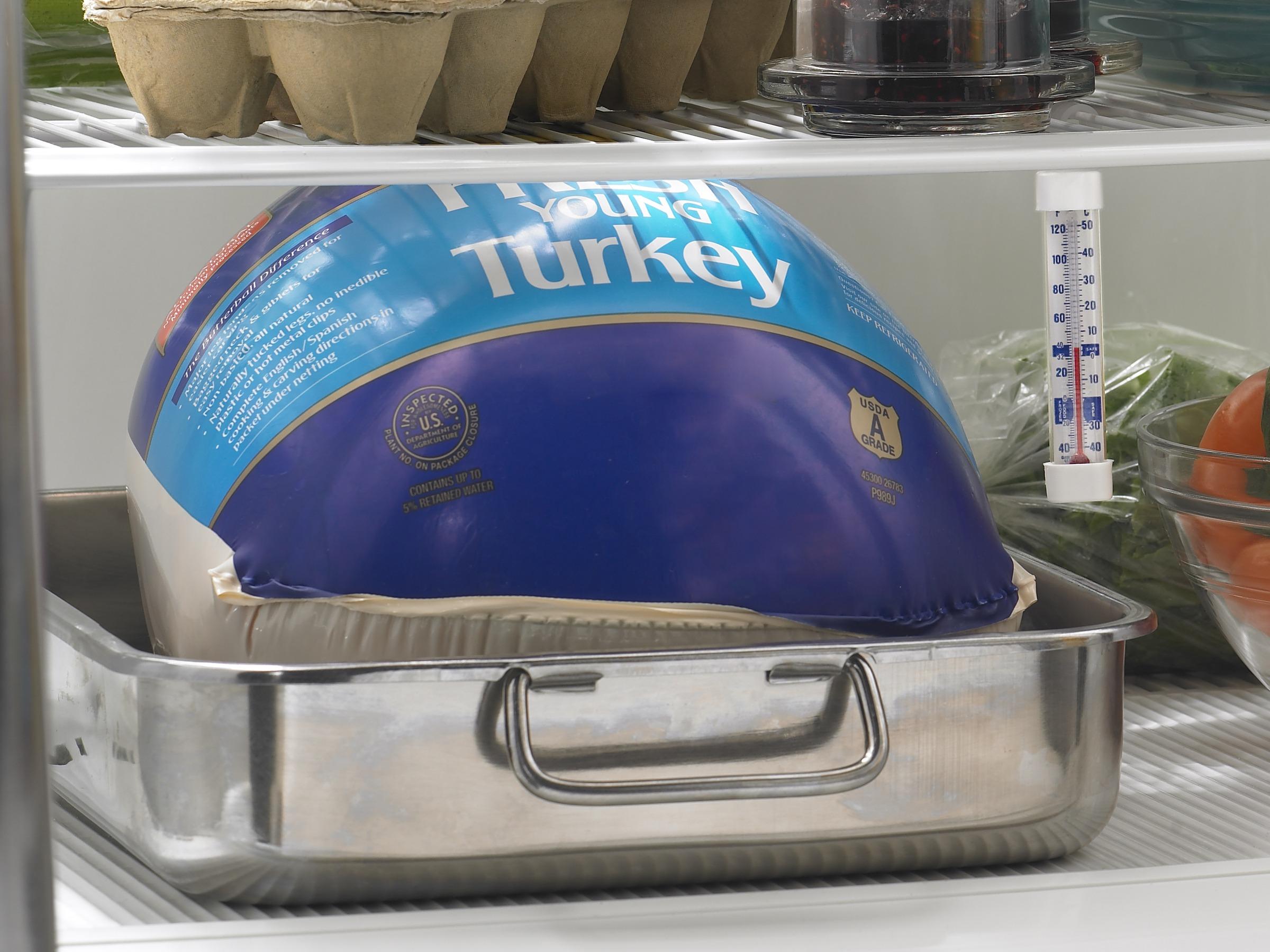
The Thanksgiving turkey needs a head start. How much depends on what it weighs.
Check the label before you plan Thursday dinner. A 12-pound bird and a 20-pound bird are on very different clocks.
Before you figure out how to fit the green beans and the dressing in the oven, pull the turkey far enough out of the freezer to read its weight. On Monday, November 23, the difference between a 12-pound bird and a 20-pound bird matters more than what you plan to rub on the skin. One might have time to thaw in the fridge for Thanksgiving. The other needs a different plan if it’s still frozen solid today.
The USDA’s Food Safety and Inspection Service issued updated holiday guidance on November 16. The simplest method is the one that requires the most notice: allow about 24 hours in the refrigerator for every four to five pounds. Thursday, November 26, may look three days away, but a turkey that needs to go into the oven at 9 a.m. has less time than that if you start after dinner on Monday.
There are safe ways to change course. What you can’t do is make up the difference by leaving the bird on the counter. The outside can warm enough for bacteria to grow while the inside is still frozen. The ice you feel in the cavity doesn’t tell you what happened on the surface while you were asleep.
Monday: Read the label and count back from the oven
The federal turkey thawing and roasting charts give a 4- to 12-pound turkey one to three days in the fridge, a 12- to 16-pound turkey three to four days, and a 16- to 20-pound turkey four to five. A 20- to 24-pound bird needs five to six days. Those are estimates; use the longer end when you need to be sure you have a backup arranged. Weighing in at the border of two categories doesn’t buy you a shorter thaw.
For example, if you move a frozen bird into the fridge at 8 a.m. Monday and want it in the oven at 9 a.m. Thursday, you have 73 hours. That’s around three days. A bird at the top of the 12- to 16-pound range may need another day. If you’re starting after an evening shift, the same Thursday oven slot gives you even less time. Either way, knowing on Monday gives you a choice you won’t have when your guests are parking.
Check that the fridge holds at 40°F or below. Leave the turkey in its original wrapping and set it in a rimmed pan or another container that will catch leaks. Clear a spot low in the fridge where raw juices can’t drip onto pie, cut fruit or other food that won’t be cooked. In a shared kitchen, it’s worth telling everyone why that tray needs to stay where it is. It shouldn’t get moved onto the counter every time somebody needs room for a grocery bag.
The refrigerator gives you some flexibility on the other end. The Centers for Disease Control and Prevention says a turkey thawed this way can stay refrigerated for one to two days after it’s thawed. That’s handy if the bird is ready Wednesday and dinner isn’t until Thursday. It’s a short window after thawing, not permission to hold raw poultry until the weekend because plans changed.
If you’re shopping this week, buy for the kitchen you have
A fresh turkey can eliminate the thawing wait, but it still needs refrigeration. USDA advises buying a fresh turkey without a use-by or best-by date only one to two days before you plan to cook it. If there’s a date or specific package instructions, read them before you buy. Tuesday or Wednesday is the shopping window for a Thursday meal if you’re following that one-to-two-day guidance. Check whether the store has what you need before betting dinner on a late pickup.
A turkey breast or turkey parts can make more sense than trying to replace one huge bird with another. Look at how many people will actually eat turkey, whether there’s another main and what can fit in your pan. A smaller main might leave room to make the dish everybody came for. If the whole bird is already at home, you can keep it frozen at 0°F or below for another meal rather than thawing it out of obligation.
Look at the path from store to kitchen, especially if the shopping run also means picking someone up or making a second stop. Pick up the raw turkey near the end, keep it apart from the rest of the groceries and take it straight to refrigeration. A trunk, porch or balcony isn’t a substitute for an appliance where you can control and check the temperature. That’s true even if the air feels cold enough when you step outside.
Thursday morning: A cold-water thaw is a shift, not an errand
If you need the faster method, put the turkey in a leakproof bag, fully submerge it in cold tap water, and replace the water every 30 minutes. Allow roughly 30 minutes per pound. A 12-pound bird that’s still frozen starts you at about six hours; a 16-pound bird takes about eight. Cook immediately when it’s thawed. You can’t finish the bath before breakfast and put off roasting until the afternoon.
Before you count on this method, look at the sink or container. Can you cover the entire bird with water? Can you change that water every half hour without asking the person washing the greens to work around raw poultry? If the only sink is already booked, make a plan to wash the produce first and clean and sanitize the area after the bird comes out. Put someone in charge of resetting the timer if you’ll be pulled away. A cold-water bath runs on the time of the person watching it, not just the rate in the chart.
Microwave thawing can work if the bird fits and the manufacturer’s instructions cover its size. Follow those instructions, use a microwave-safe dish, and cook immediately after thawing; parts of the bird can start to warm or cook during defrosting. If you haven’t checked that the turkey and the dish fit, don’t make the microwave your only fallback. Finding that out with company on the way is a good argument for measuring now.
If it’s still frozen, change the cooking plan
FoodSafety.gov’s troubleshooting guide says you can roast a turkey from frozen in a conventional oven. Use an oven set to at least 325°F, skip the oven bag and allow at least 50 percent more time than for a fully thawed bird. That estimate isn’t a promise for a particular oven or turkey. Remove the giblet packet with tongs once it loosens during roasting rather than wrestling with it while it’s frozen in place. This is a roasting fallback, not a reason to put a frozen turkey in a fryer.
Roasting from frozen saves the hours at the sink, but it takes over the oven. If that means the macaroni and the dressing can’t go in when you planned, choose which dish to move or move the meal itself. An early dinner time really only matters when there’s something on the other side of it: a shift, a ride, a relative heading to another house. If you need to protect that time, serving a smaller main may work better than committing several more hours to the big one.
Whatever the thawing method, give yourself a stretch of counter space for the raw bird. Wash your hands with soap and water for at least 20 seconds before and after handling it. Don’t rinse the turkey; splashing can carry raw juices around the sink. Keep a separate board and utensils for food that won’t be cooked, and clean and sanitize the areas the raw turkey or its juices touched. Setting the serving platter in another spot before you open the package makes it less likely to get pressed into service for the raw bird.
The finish line is a thermometer reading
A roast chart tells you when to start checking. For a whole turkey, use a food thermometer and look for at least 165°F in three places: the thickest part of the breast, the innermost part of the thigh and the innermost part of the wing. Avoid touching bone with the probe. Check even if the bird has a pop-up timer. Skin color and a single reading in the breast don’t tell you what happened near the thigh.
If dressing is part of the meal, the CDC recommends cooking it separately; it’s easier to check the center that way. The center should reach 165°F whether it’s in a separate casserole or cooked inside the bird. Cooking it separately also means you can finish it on its own schedule. If one of the turkey readings is still low when people arrive, keep cooking the bird and serve something that’s actually ready rather than carving around the underdone spot.
For a question your label doesn’t answer, USDA’s Meat and Poultry Hotline is 1-888-674-6854. It generally runs weekdays from 10 a.m. to 6 p.m. Eastern, and this Thanksgiving USDA lists holiday hours of 8 a.m. to 2 p.m. Eastern. On the West Coast that’s 5 to 11 a.m. Thursday, so call before your late-morning prep if you think you’ll need help.
For now, the useful work takes about five minutes: find the weight, decide when you need the oven and check that there’s room for a leak-catching tray in the fridge. If the numbers don’t fit, change the shopping list or the dinner time today. You’ll have more options now than you will with a frozen turkey in one hand and the doorbell ringing.