

- Platforms
- Nintendo Switch 2
- Release date
- November 5, 2026
- Publisher
- Nintendo
- Genre
- Action-adventure
The Legend of Zelda: Ocarina of Time
Action-adventure
The right stick changes how you read Nintendo’s dungeons. Two independent playthroughs help explain where the remake still lets the room do the teaching.
Review breakdown
- Gameplay8.8
- Visuals & Graphics8.4
- Audio & Music8.5
- Story & Characters8.5
- World & Activities8.7
Pros
- The free camera lets you inspect rooms without stopping Link's movement
- Fewer Water Temple keys reduce some unnecessary backtracking
- Orchestral arrangements and expanded scenes enrich the presentation
Cons
- Returning players will recognize many dungeon solutions
- Golden Skulltula webs and stronger visual cues can reveal discoveries early
- One cited reviewer found no Master Quest after finishing the game
The verdict
Buy it for a focused, single-player puzzle adventure, especially if you have not played the original. Returning players looking for unfamiliar dungeon challenges should temper their expectations.
Ocarina of Time review: The Switch 2 remake gives Hyrule a better camera
By Darius Vale
Nintendo Switch 2 remake
Let go of the target button and look up. In a three-dimensional dungeon, that small action can be the difference between spending ten minutes on a puzzle and spending ten minutes trying to see where the puzzle starts. Nintendo’s Switch 2 remake of The Legend of Zelda: Ocarina of Time, released November 5, gives players control of the camera with the right stick and puts jumping and running on buttons. People who remember playing the 1998 Nintendo 64 game might count those changes among the less dramatic parts of the remake. They are a good reason to choose this version, especially if you have never played the original.
The recommendation comes with a boundary. Buy the remake for a standalone, single-player adventure that still builds a remarkable amount of meaning out of a room, a tool and a locked door. Players who mainly want the unfamiliar feeling of solving those old dungeons for the first time should expect some familiar answers, along with fewer obstacles on the way to them. This review draws on Nintendo’s released material and hands-on reporting from Kyle Hilliard at Game Informer and Josephine Watson at TechRadar. Their Switch 2 observations do the work where the discussion turns to how the game actually feels.
Let the room tell you what matters
Nintendo’s anniversary presentation showed the new controls in the daylight of Kokiri Forest. Watson’s report puts a little weight behind that demonstration. Returning to the area on a review copy after an earlier preview, she found herself jumping, dashing and swinging the camera around simply because she could. The key improvement is the independence of those actions. You can use the camera to examine a place without treating the act of looking as a move Link has to make. Sometimes the sensible thing to do while crossing a room is to keep walking and keep looking.
That changes how an old Zelda room can teach. You’ll enter a space with a conspicuous door, a raised platform and something that seems just out of reach. Part of the puzzle is deciding which of those details matters now and which will make sense when you return with an item. If your view keeps drifting to the thing you have just targeted, the doorway on the other side of the room may disappear from your plan. A free camera makes it easier to keep two ideas going at once. The puzzle can ask what a tool does without also asking whether you can swing the camera back in time to see what happened.
This is why the game is a useful purchase for a newer Zelda player who came in through Breath of the Wild or Tears of the Kingdom. The appeal is a change of scale. A traditional dungeon makes a few rooms worth studying because they share a layout, items and doors. You can look hard at a staircase the first time through and recognize later why the designer put it there. The camera makes it easier to notice that exchange. The progression still gives it a reason to exist.
Hilliard’s report specifically points to fewer keys in the Water Temple as one example of the remake loosening the original’s restraints. That’s a revealing kind of edit. A key can be a breadcrumb, proof that a side room mattered, or just the thing you realize you missed after marching all the way back to a door. A smaller number can let you focus on how the temple fits together. It can also leave regulars with less resistance to work against. Anyone returning specifically for the old dungeon’s reputation as a test should price in that change before buying.
Where a helpful clue becomes the answer
Watson found some of the new cues more intrusive than the controls. Her review describes golden webs that indicate the locations of Golden Skulltulas and visual cues that make traps, doors and other objects easier to pick out. The webs illustrate the problem particularly well because spotting a hidden collectible is part of the activity. A clue that tells you what to inspect can be a relief if you’re tired of looking at every wall. For someone who likes combing a space for small inconsistencies, the same clue makes the wall less interesting.
A camera upgrade and a clearer clue accomplish different things. The camera gives you a better way to see what you’re interested in. A clue tells you where to direct that interest. Giving the player the right stick is generally an improvement because it helps with the task they’ve chosen. Signposting is more dependent on taste. The more vividly the scenery is drawn, the more work a cue might have to do to compete with all the new detail. Sometimes that cue is exactly the bit a player could have enjoyed finding.
The remake has two straightforward ways to accommodate a person who gets stuck. The in-game Threads of Time keeps track of story progress and can show a next objective. Zelda Notes, supported through the Nintendo Switch app on a compatible device, adds activities such as records and a picture-based location challenge. Nintendo also documents the update that adds Zelda Notes support. If you want the adventure to hold its shape across short sessions, check the story recap when you need it and leave the phone features for later. The outside help is a choice you can make once you have a sense of how much information you want.
Watson reported no Master Quest after rolling credits. That is one reviewer’s account of the game she finished, so buy on the content available now. The extra challenge of a remixed dungeon layout is a reasonable thing to want from this edition, because experienced players will already recognize much of what’s asked of them. But the answer to whether a design change is worthwhile depends on how much the old difficulty meant to you. It’s possible to appreciate that a room reads more clearly and still want a room you’ve never seen.
A familiar place with a different sound
Nintendo rebuilt the soundtrack around orchestral arrangements and expanded voiced cutscenes. Hilliard welcomed the arrangements and was less convinced by some of the voice delivery. Watson found that the larger scenes and altered dialogue helped the story. That disagreement is good news for someone deciding what to expect. Bigger presentation changes how much the audience supplies on its own. A character who used to exist through a gesture, a line of text and a bit of music now also has pauses and a performed voice. Whether that makes the character warmer is exactly the sort of thing two people can read differently.
There’s still a lovely relationship between how the game sounds and what it asks you to do. The story gives the ocarina a purpose in Hyrule. Melodies govern things such as access and travel, and the remake lets you play them with controls or use the system’s microphone to hum a learned tune. That playfulness feels more pertinent than a higher-resolution close-up of a flute. A piece of music you remember well enough to hum can also be a piece of information you use. The note sequence is part of the vocabulary of the adventure, and hands-on descriptions of the arrangements stand alongside a rather practical reason to pay attention to melody.
The time travel works on the same principle. You meet a person or see a place at one point in the story and take an impression of it to another. The structure asks you to remember both versions at once. Hilliard describes that interplay as one of the original design’s durable pleasures, even as he found the remake rarely surprised him. It’s worth separating those observations. A first-time player will get the surprise of seeing a familiar place change. A returning player may get a deeper appreciation for the staging of the change. Only one of them can walk in unaware of what the next era holds.
Who should spend the money
If you already have a Switch 2 and want a puzzle adventure with a beginning and an ending, this is an easy recommendation. The controls cut incidental friction without taking away the reason to pay attention to a room. Hilliard’s account indicates how much of the old progression is still there. Watson’s tells you where sharper signals and gentler puzzles may make the journey feel shorter. Between those accounts, a new player has a useful picture of what the purchase gets them.
Consider one more practical difference before you start. Watson reports settings for camera speed, motion aiming and hold or toggle targeting, plus a one-handed option for playing the ocarina. Those choices can be worth exploring early, especially if your useful amount of stick movement differs from the default. One configuration might make it easier to look slowly around a puzzle, while another makes it easier to turn in combat. The same room can read differently when the camera responds at a speed you expect.
If you already know each dungeon and mainly want new problems, a video of one familiar sequence will help more than a list of resolution numbers. Pick an old room you like, watch how the camera follows Link across it, and ask how much the new perspective changes the pleasure of being there. The remake makes a persuasive case to revisit Hyrule. How often you will be surprised is an entirely different part of the purchase.
Sources
- Nintendo — US release and standalone game overview
- Nintendo — anniversary presentation and control, music and Threads of Time details
- Nintendo — UK game and screenshot gallery
- Nintendo — November 5 update and Zelda Notes support
- Kyle Hilliard, Game Informer — independent Switch 2 review
- Josephine Watson, TechRadar — independent Switch 2 review
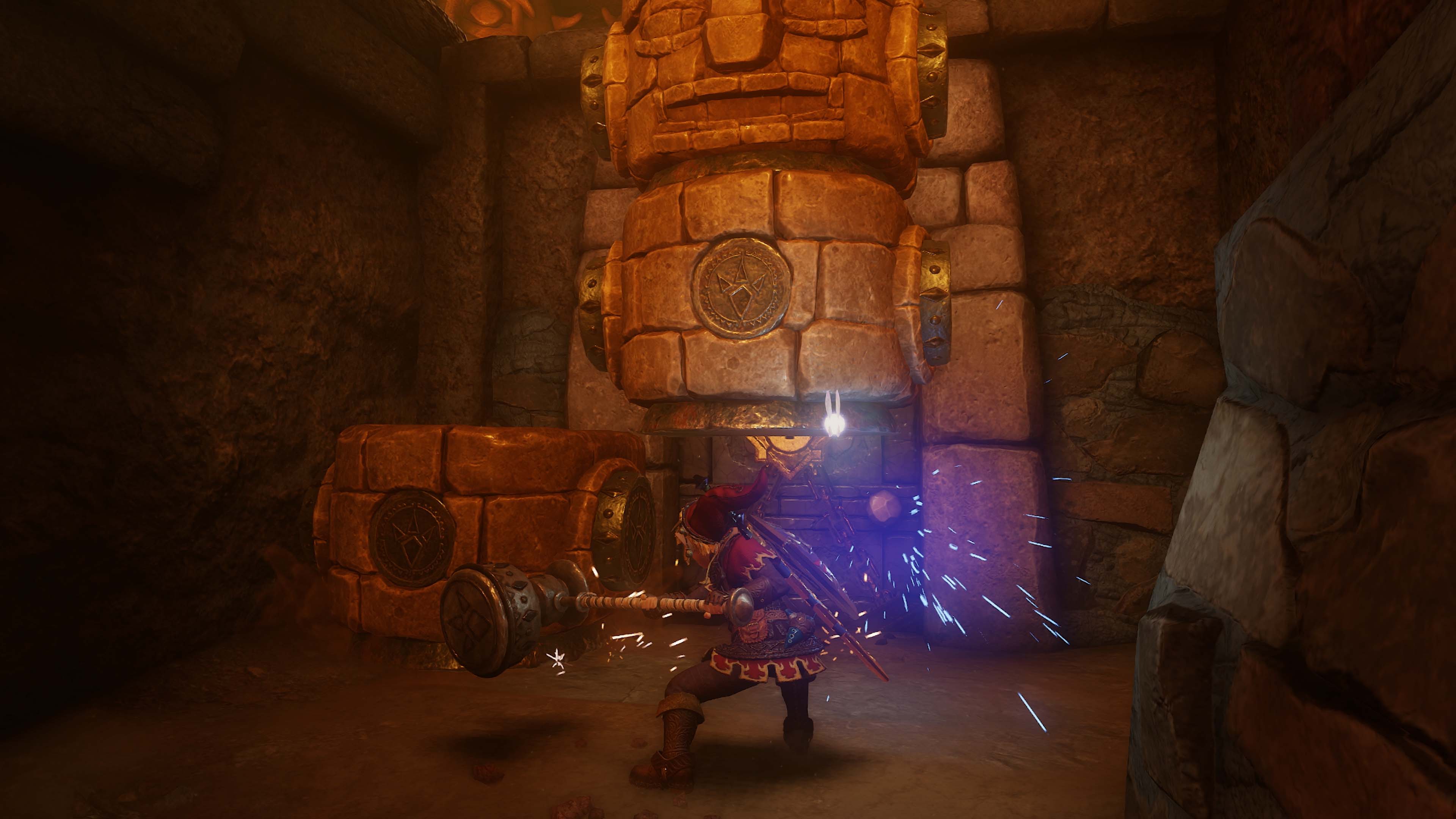
Link explores a stone dungeon in Nintendo’s 2026 Switch 2 remake of The Legend of Zelda: Ocarina of Time. Photo credit: Nintendo.