

What October’s grocery prices mean for a holiday shop
The latest federal inflation report shows where grocery prices moved heading into November. A short list of repeat purchases tells you where your own bill might be changing.
The price that makes you stop in the aisle may be for something you buy once a year. Holiday butter, a particular cut of meat, the good rolls that are expected at someone’s table. You remember paying less, but the package looks different and someone sent you a screenshot of a sale that requires a loyalty account. By the time you get to the register, the total reflects a dozen decisions like that. The latest inflation numbers give those decisions some context. For the amount you can afford to spend this week, the figures that help are the ones you can compare on the shelf.
In its November 10 release, the Bureau of Labor Statistics reported that its U.S. food-at-home index rose 0.4 percent from September to October on a seasonally adjusted basis. The food-away-from-home index rose 0.5 percent. Inside the grocery figures, some categories moved faster, one declined and one held steady. That gives shoppers a reason to look item by item before deciding where to make a change. The biggest line on the receipt, the biggest change from last visit and the thing that’s easiest to swap can be three different purchases.
Read the numbers at the right scale
The CPI estimates the average change in prices across a representative mix of goods and services. The grocery index is a slice of that measure, and its items have weights tied to what consumers spend. A household can spend a much bigger share on produce or a smaller share on meat than the mix behind the national figure. Local stores have their own sales, stock and package sizes. The October index gives you national context for a month that’s already over. Your neighbor’s bargain or your own expensive trip can both fit inside that picture.
BLS reported that the index for meats, poultry, fish and eggs rose 0.5 percent from September to October. Within that category, beef rose 0.9 percent. Fruits and vegetables and dairy and related products each rose 0.6 percent. Cereals and bakery products held steady, and nonalcoholic beverages fell 0.3 percent. “Other food at home,” the category that includes snacks among other groceries, rose 0.7 percent. These are seasonally adjusted changes. A category that includes beef, fish, eggs and poultry gives you no single price to plug in for a turkey.
October also has an unusual gap in the public comparison. BLS says it lacked most October 2025 indexes because of the 2025 lapse in appropriations. For affected series, the November release can report a change from September 2026 to October 2026 without being able to report the usual October-to-October change. Keep the month attached to the 0.4 percent figure if you share it. If what you really want to know is how much a recurring holiday meal has changed since last year, last year’s receipt is a better starting point for that particular question. Treat any missing quantity or package detail on the receipt as an unknown.
Compare the basket you’re actually buying
Start with three or four repeat items rather than trying to reconstruct every trip. Pick things you can identify by size and brand, or by a genuinely similar replacement. Write the amount paid, the package size, whether it was on sale and whether you needed a membership or coupon to get that price. A store app, a paper receipt or a picture of the shelf label can supply enough information for the next trip. If there’s a promotion, keep the regular price separate so you know which figure is likely to recur.
Say a hypothetical shopper paid $4 for a 16-ounce bag of rolls and is now looking at a 12-ounce bag for $3.60. The register price is down 40 cents. The larger bag cost 25 cents an ounce and the smaller one costs 30 cents an ounce, or 20 percent more by weight. If the smaller bag covers the meal, you can still spend less by buying it. If you need more than 12 ounces and would have to buy two bags, your spending jumps to $7.20. The right comparison depends on how much you’ll use and how much cash you have available that day.
Do the calculation with the same unit for both packages. Use ounces for two bags of the same kind of food and count for things you plan to serve individually where the sizes are similar. If a label compares a price per pound with a price per ounce, convert one of them before drawing a conclusion. If two options give different amounts of usable food, think about what will actually go into the dish. An inexpensive package loses some of its appeal when it calls for buying another ingredient or when much of it will go unused.
A quick comparison works for a group meal too. Ask whoever is bringing a dish to tell you how many portions they expect it to serve. Take another look at the shopping list once the answers are in. If there will already be two sides that serve the whole table, buying enough of a third side for everyone to take seconds may be optional. That cuts spending in a way a percentage off a larger package can’t. Keep the guest count and the likely servings beside the dollar numbers so you can explain a change to whoever is helping.
Make room for the limits of a good deal
Shelf tags have conditions that matter when you’re planning the week. A lower price per pound can demand a larger package. A coupon can require an app, a separate login or a minimum purchase. A particular sale can end before your ride to the store. Look at the likely total you’ll need to pay and the amount of food you can use or store. Saving on a future meal is useful only when you can carry the cost now and have space for the extra food.
For another hypothetical, suppose one store has the same three products for $20 and a second store will sell them to you for $17. The extra trip saves $3 before any transport cost. If you’ll pay $4 for a separate round trip, taking it leaves you $1 worse off. If that store is on your usual route and you’d be passing anyway, the same sale might be worth using. Someone shopping with children or squeezing a trip between shifts can factor in the time as well. Compare the whole errand before counting the savings.
A good substitution respects what you need the food to do. You might consider frozen produce for a cooked side and keep the fresh option where texture matters most. Compare plain and prepared versions if you have the time and equipment to do the prep yourself. An ingredient that helps you get dinner on the table before you leave for another shift can be worth paying more for. Pick the swap you can carry into the kitchen and still finish the meal you planned to make.
Plan for a sold-out item when you make the list. Write a reasonable second choice and the most you’re willing to spend on it. Then decide which item you’d leave behind if you exceed the total. In a shared household, write that information where another shopper can find it. The person who ends up doing the errand can make a decision without trying to reconstruct the budget from a chat message while the line is getting longer.
Keep one number for the next shop
Hold onto the receipt long enough to mark the changes you want to remember. An old purchase and a new one may look alike until you see that one came with a coupon or the household bought two because someone was visiting. Compare like with like first. For the spending question, count the changes in quantity too. You can spend more even when prices are unchanged if the household is feeding more people. You can also spend less while the unit price goes up by making a smaller purchase that fits the meal.
If you want to try a personal price check, track the same three items for a couple of ordinary trips after the holiday. Keep one column for unit price and another for the amount you spent. Where a store discount makes the comparison difficult, write down the price you actually paid and flag the deal. Over time you’ll have a small record you can use when a large package or temporary offer looks tempting. It’s worth starting with items you buy regularly enough to see again.
The BLS calendar gives December 10 as the release date for the November CPI. By then the meal may already be over and the receipt might be buried in a coat. Take a minute with it while the shopping is still fresh. Put a mark by the purchase whose size or price surprised you. That gives you one specific thing to check when you return to the aisle, and an answer you can use before you hand over the card.
Compare an online cart with the shelf only if you’d be willing to shop either way. Delivery fees, pickup minimums and substitutions can change the total. If you put a hard limit on what you can spend, switch off unwanted substitutions or set a maximum price where your store gives you that control.
Sources
- Bureau of Labor Statistics October 2026 Consumer Price Index release, published November 10
- BLS Consumer Price Index frequently asked questions
- BLS on why the published averages and household experiences differ
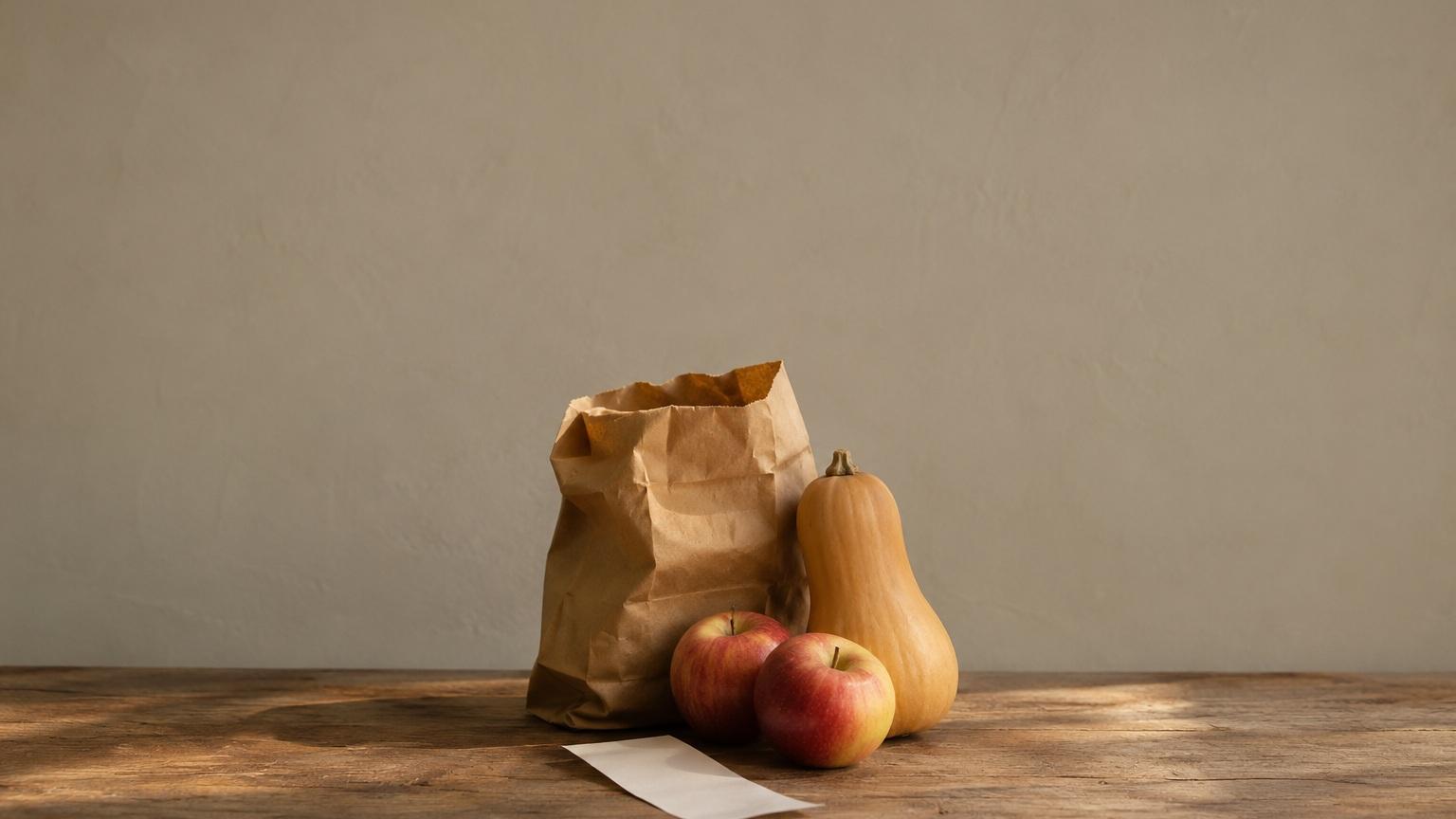
A small grocery haul and a receipt in a conceptual still life about holiday shopping. Photo credit: Fever Images.