

Make a plan for Thanksgiving leftovers before dinner
Give the food a place to cool, give guests a way to get it home cold, and put a date on the portions you want to keep.
Somebody is still cutting pie when somebody else asks if they can take turkey home. The serving platter has been on the table through dinner, another round of potatoes and a stretch of conversation nobody wanted to interrupt. By then, the question about leftovers has two parts. How much is left, and how long has it been out?
Thanksgiving falls on November 26 this year. If you're hosting, the USDA Food Safety and Inspection Service's guidance makes the afternoon easier to plan. Refrigerate perishable leftovers within two hours, or within one hour if the outdoor temperature is above 90°F. Use shallow containers so the food cools quickly and evenly, and keep the refrigerator at 40°F or below. For a meal that will stay out longer, USDA advises keeping hot food at 140°F or above. Those temperatures give you something concrete to check while people are still at the table.
Start where you have the most control. Before dinner, clear a refrigerator shelf, set out clean containers and find the thermometer. Each takes a minute in an empty kitchen. Each becomes a small negotiation when someone is trying to fit a whole roasting pan past the milk.
Put the containers where the meal ends
One way to serve a big meal is to bring a smaller platter of turkey to the table and keep the rest properly hot until people ask for more. Plan the same way for stuffing, gravy and other perishable dishes. Replenishing a table works best when the food waiting in the kitchen is being safely held. If it has been sitting on the counter since the first platter went out, you have another dish to track.
Start the clock when perishable food leaves safe hot or cold holding. A three o'clock serving platter with no temperature control needs to be refrigerated by five under ordinary indoor conditions. A dish set out earlier has its own deadline. If people are eating outside in weather above 90°F, plan around the one-hour limit. In either case, set a reminder with enough lead time to do the packing. A timer at the deadline leaves the work for the moment you should already have it done.
A potluck makes this easier if the person bringing the dish can tell you how it traveled. Ask whether it came straight from the oven or refrigerator and whether it was kept hot or cold along the way. Offer space in the fridge or on a safe warming setup when they arrive. For a dish that needs reheating before serving, check the center with a food thermometer. A bubbling edge gives you information about the edge. The middle of a deep dish can still be cooler.
USDA's two-hour guidance is a limit for food outside safe temperature control, so time on the counter counts across the evening. Moving the same plate from the dining table to the kitchen counter changes its address. If a platter was out too long, discard the food. Smell and appearance offer little help with that decision, and setting the microwave to run longer gives you no assurance about food that sat out beyond the limit.
Give the fridge food it can cool
The platter that feeds ten people is useful for serving. At storage time, cut the remaining turkey into portions and divide gravy, potatoes and other leftovers among shallow containers. Large pieces and deep batches take longer to chill at the center. Imagine opening a container the next day for a single lunch. Packing that portion now helps it cool and saves you from taking the entire batch back out tomorrow.
Use lids or other airtight wrapping as USDA recommends. Leave enough room in the refrigerator to get the containers onto a shelf quickly. If you're working with one small fridge, line up two rows of smaller containers before dinner and estimate how much space the feast can use. Check the refrigerator temperature in advance. That gives you time to sort out a warm fridge before it becomes the only place to put a turkey.
The freezer works at 0°F or below and can take the portions you already know you want later. Choose containers that fit what one person or one household will actually reheat at a time. A half cup of gravy frozen separately is easier to use for a small dinner than a whole container of turkey and gravy that needs to come out together. Label each portion with what's inside and the date you packed it. When meals are stacked two deep, the date you wrote down Thursday is easier to use than the date you try to remember on Sunday.
USDA recommends using refrigerated leftovers within three to four days. For a Thursday meal, Saturday is a good point to look in the fridge and decide what you'll eat over the weekend and what should go into the freezer while it's still within that window. A family that already has weekend plans can freeze those portions Thursday. Having a freezer plan early makes it easier to keep the food you actually want.
Pack for the drive you’ll take
If you want to send food with guests, refrigerate their portions when you put away your own. Then hand them out cold just before they leave. Take-home containers can stay in the fridge while people help clean up, finish a game or get the kids into coats. You can put names on the lids and keep bags near the door.
For a longer drive, pack a cooler with enough ice or frozen packs to hold the food at 40°F or below, and use a thermometer to check. The same plan helps on a short drive that includes a fuel stop, a visit to another relative or a car that stays warm after parking. At the other end, move the portions to the refrigerator promptly. If you know a guest has hours on the road and no way to keep food cold, agree on what travels safely before portioning the turkey.
The cooler can do two jobs during the visit. Keep the drinks that people reach for regularly in their own cooler, and leave the one set aside for leftovers closed until it is time to load the car. An insulated bag is also useful when ice packs and a thermometer can keep the portions cold for the whole trip.
Think through the handoff when two households are involved. A guest may assume the meal went into the fridge soon after serving. A host may assume a guest has a cooler. A quick exchange gives both sides the missing information. Saying when the food was packed is also useful for the person deciding what to eat first once they get home. The destination refrigerator is part of the trip.
One easy way to cut the scramble is to leave a note with the invitation. If someone wants leftovers and has a long drive, ask them to bring a small cooler with ice packs. If the meal is at your place and you have an extra cooler, offer it at the start of the evening. Give yourself the option to say the food has been out too long if dinner goes differently from the way you planned.
Keep the reheating job small
USDA says to reheat leftovers to 165°F. For sauces, soups and gravies, bring them to a boil. With a microwave, cover the food, stir or rotate it as appropriate, let it stand and check the temperature in more than one place. A shallow bowl makes stirring easier. If you combine a few things on one plate, check the thickest or densest portions, including the center of any compact mound of stuffing or mashed potatoes.
If you plan to take leftovers to work, keep them cold on the way and store them in the refrigerator when you get there. A cold lunch needs a reliable cold place to wait even when you're planning to eat it cold. If you want to heat it, bring just the amount you're eating so that the rest can stay refrigerated at home.
Leave the slow cooker for a dish you're preparing with a method suited to that appliance. USDA advises against using a slow cooker to bring cold leftovers back up to temperature because the food can spend too long warming through the range where bacteria grow quickly. If you're making hot sandwiches for a few people, heat the portion of turkey you'll use and check it with the thermometer. Then deal with the bread and toppings while the rest stays in the fridge.
The plan scales down to dinner for two. Put one container in the fridge for lunch and freeze the portions you'll be glad to find in December. It scales up to a potluck if you give one person charge of the storage space and another a clear time to start packing. Both jobs are brief when people know which dishes have been out and the lids are easy to find.
The time worth protecting is the stretch immediately after the meal. Set one fresh platter out when the first one empties, ask the person who brought the casserole how they kept it warm, and put the saved portions away on time. Then the people still at the table can stay where they are. When someone asks for a plate to go, all you have to do is open the fridge.
Sources
- U.S. Office of Personnel Management · 2026 federal holiday calendar
- USDA FSIS · Safe handling of leftovers
- USDA FSIS · Safe hot holding
- USDA FSIS · Methods for reheating food
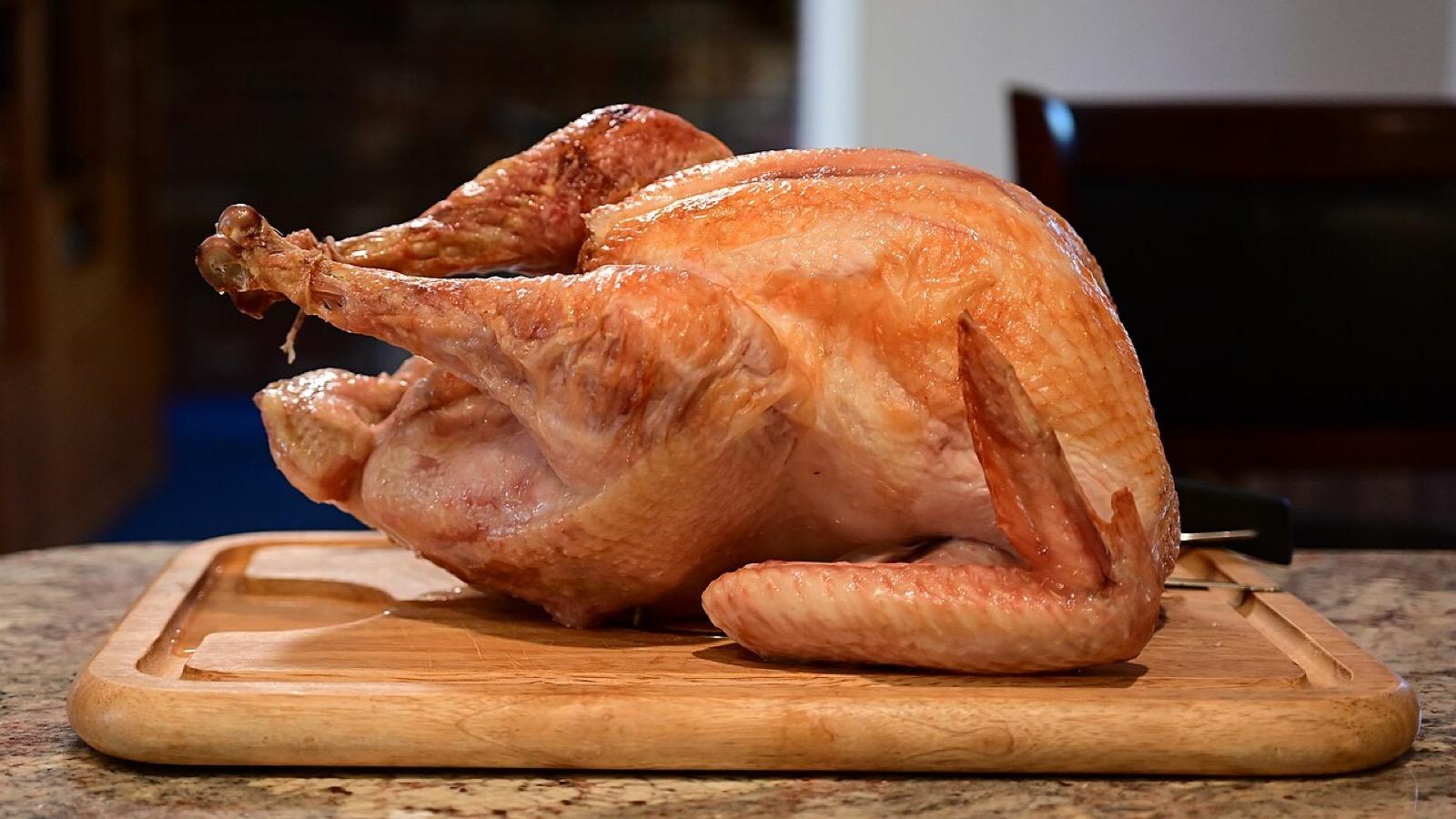
A roast turkey ready to carve at Thanksgiving in 2022. slgckgc https://creativecommons.org/licenses/by/2.0/ Source: https://commons.wikimedia.org/wiki/File:Thanksgiving_Turkey_on_platter.jpg