

Digbound makes the way out part of the dig
Somnambulist Games’ first-person mining sim is out on Steam. Its sell-and-upgrade loop gives players a reason to think about the route back before they break new ground.
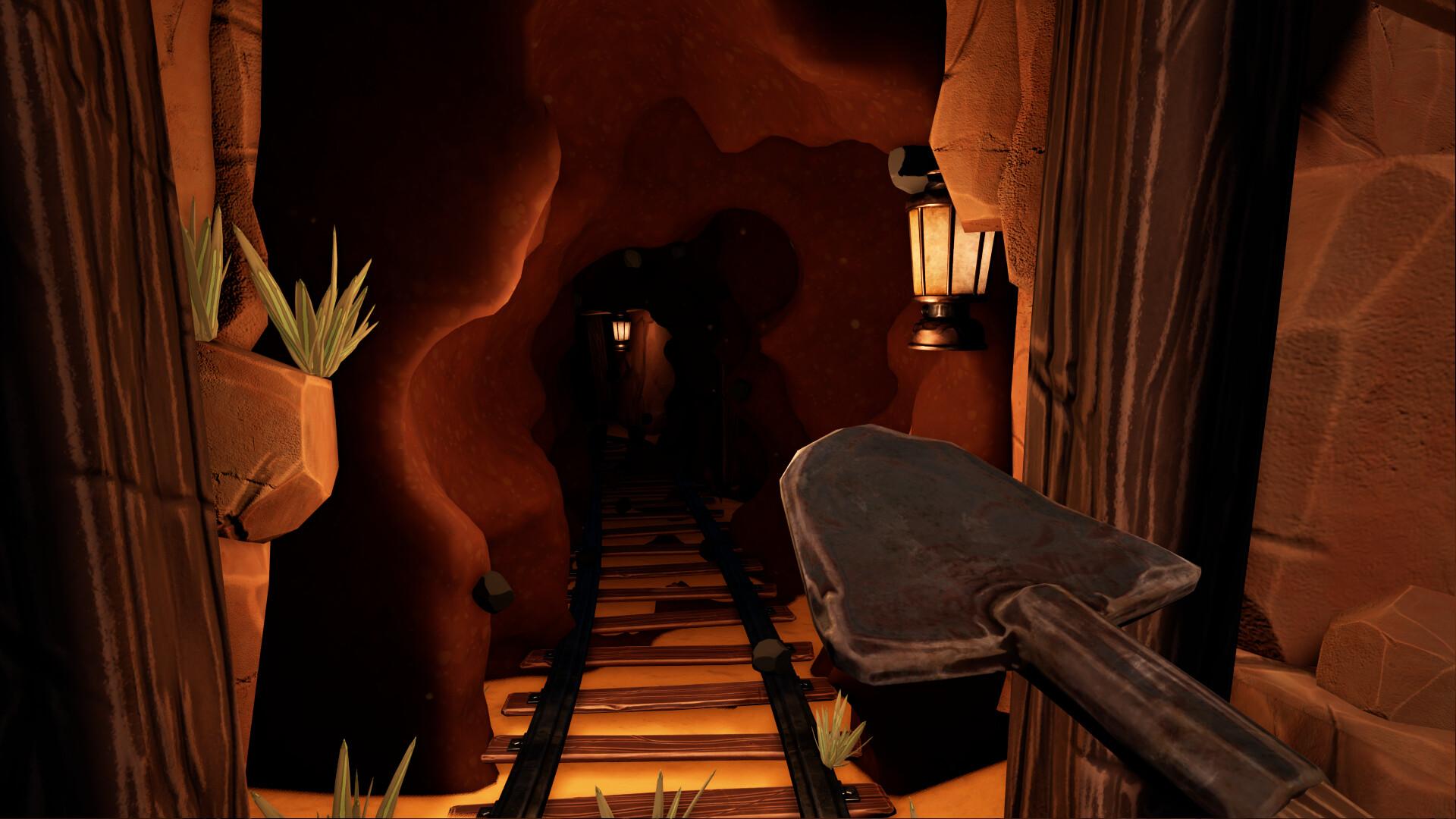
In one of the official screenshots for Digbound, a shovel points down a mine passage toward a wooden arch. A track runs into the dark. There are warmer lights farther along, but the frame gives you just enough ground to see where your feet would go next. The most interesting thing in the picture might be the part of the passage behind the player. Ore has a sale price only after you’ve brought it somewhere you can sell it.
Somnambulist Games launched Digbound on Steam on November 20. The developer, which also publishes the game, describes a short, single-player mining sim built around digging for ore, selling it and upgrading your equipment to tackle tougher ground. The US Steam listing showed a $5.99 regular price and a $4.79 introductory price through December 4 when checked for this edition. The developer first put a demo in front of players during the October Steam Next Fest. Its November release announcement points to previously unseen depths and secrets underground, without spelling out what players will find at the bottom.
That modest setup gives the game an unusually clear question. Would you rather have enough room to carry more out each time, or a tool that gets you into the next layer sooner? Those are two of the upgrade directions Somnambulist advertises. They sound like accounting until you put a ladder, a bend or a length of dark passage between you and the surface. A bigger bag and a stronger shovel shorten different parts of the same job. The distance a player spends walking can change what either upgrade is worth.
A straight line on a store page
The developer calls this an incremental game. Here that means you repeat a manageable task, spend what you earn on improvements and return able to do more than you could before. You can see the appeal without knowing the term. The first trip establishes the size of a load and the limits of a tool. The next gives you something specific to improve. A player can spend a few minutes thinking about a problem they actually remember having, instead of guessing what a stat will do thirty levels later.
Selling is the hinge. If the most important moment were the moment of discovery, a bright stone coming loose would be the end of the story. Here discovery comes in the middle. Whatever the stone is worth has to be turned into something that changes the next trip. The Steam description puts inventory, digging power and tool improvements next to one another. Its accounting is simple enough that you can see why those categories need to feel different. More capacity should matter when you keep abandoning promising work because you’re full. More power should matter when your route is good and the ground itself is slowing you down. Those are examples of how to read the design, rather than claims about a specific optimal upgrade.
The viewpoint changes how that calculation lands. A spreadsheet can tell you that increasing capacity saves a trip. A first-person camera lets you picture the actual stretch of floor you would have to walk again. The official images show wood bracing, paths with rails, openings in the stone and a few spaces in which the light drops away. They illustrate the promise of the concept. Going back through a place you recognize could make a short route feel like your work, even if the inventory screen remembers the trip as a row of ores.
A shovel is also a decision about time
A game like this has at least two clocks. One is the count you can see in money earned and upgrades bought. The other is the amount of time you feel you spent getting there. Stronger equipment gives the first clock a chance to speed up. Knowing when to turn around and what to leave for the next run can do the same for the second. The interesting point is where they disagree. An extra minute spent following a promising bit of rock may be enjoyable even if it buys less than returning now and starting again.
An easy way to picture that choice is to imagine two players with the same load. One wants to clear enough space near the entrance to make the next several trips straightforward. The other wants to reach the edge of what their equipment can open, see what’s there and cash out when it becomes too much work. The first treats the mine as a place they’ll use repeatedly. The second wants each trip to show them something new. That difference is more revealing than a list of the ores, especially at launch, when showing readers all the discoveries could spoil the best reward an exploration game can offer.
There’s room for a little friction on both routes. If the developer made the next valuable deposit visible from every bend, there would be less reason to remember the path and less satisfaction in choosing to push on. But if the work of getting there seldom changes, the distance between investments can become the whole thing you feel. Somnambulist describes harder ground at greater depth and better rewards in return. That tells us where the escalation is supposed to come from. The trailers and description cannot establish how consistently the game delivers it across a full run.
What a short mine has to get right
“Short” is part of the promise on Steam. It shifts the focus away from how long a buyer can keep an upgrade chart growing and toward what the game can do with one good evening. A compact game can let a first tool become obsolete quickly, give you time to enjoy what replaced it and end while you still remember what the original problem felt like. It has less room for a long patch of interchangeable upgrades in the middle. Each time the numbers rise, something in the trip has to become easier to read, cheaper to repeat or more surprising to attempt.
The official images are useful here because they show the developer doing more than changing the color of dirt. A shaded start in a rocky yard looks different from the orange light of a timbered corridor or a blue-lit cavern with room for a rail line. A passage that looks like a way out can introduce a new route on the next trip if the space around it is legible. The images establish distinct-looking spaces. They leave open how often the finished game asks players to reconsider where they are going and how they mean to get back.
A short game can make visible progress through the shape of a place, too. Watch the difference between the yard in the shop imagery and the underground shots. Outside, the hard rock looks like a boundary. Inside, the same family of material frames distant light and doors. The developer has chosen to show a few destinations down the mine, including a doorway that looks more deliberately constructed than the passage leading up to it. It's an invitation to keep playing for a reason beyond the next inventory increase. The release post promises discoveries, but anyone who wants to meet them fresh can get the idea from those exterior and entrance images.
What you can check before buying
The launch timing gives the smaller team one advantage. It can tell you what a single visit to its game will ask of you. The Steam page makes room for the actual tools and ground, with very little story to learn in advance. For a newcomer to this kind of sim, understanding just one trip is a reasonable way to decide whether there is a whole game in it.
The developer lists Steam achievements, cloud saves and a single-player mode on the US store. It gives DirectX 12 and 2 GB of available space in the minimum requirements, but leaves processor and graphics specifics as “TBA” on the listing checked here. A spare 2 GB is a useful installation detail. It does not tell a player with an older computer what framerate or graphics settings to expect. Look up current compatibility for your own setup before buying for a handheld PC or an older machine, and check the online listing for any changes to price or requirements. The October announcement establishes that a demo was offered at Next Fest. Check the current Steam page before counting on that sample still being available.
This feature draws on the studio’s announcements and launch materials. The early store reviews were mixed when checked, on a small number of submissions, and the rating can move quickly on a new release. The more informative thing to look for in longer player reports is a description of when the mine starts to feel different. A player who tells you how an upgrade changed a route has given you something more useful than an hour count alone. Someone who describes where they kept repeating a trip without a new decision has offered the other side of the same evidence.
Digging is an easy verb to put on a marquee. Digbound has made the quieter act of returning do some of the work. Carry a haul out and the same stretch of tunnel can tell you what to buy, how deep to push and whether you feel like making one more trip. At this price and scale, that’s a specific promise. What happens when you can finally return through a stretch you can navigate from memory is what makes the release worth watching.
Sources
- Somnambulist Games on Steam — release date, US introductory pricing, store feature list, screenshots and requirements
- Somnambulist Games launch announcement reproduced by SteamDB from Steam Community
- Somnambulist Games demo announcement and October Steam Next Fest details as listed on Steam
A timbered mine entrance and its rail line in an official Digbound gameplay screenshot. Photo credit: Somnambulist Games.