

Minotaur puts a company director’s private life under pressure
Andrey Zvyagintsev’s Cannes Grand Prix winner opens in U.S. theaters with a CEO whose problems at home are tangled up with the power he has at work.
Gleb has people who answer to him. He also has people he has to answer to. In Andrey Zvyagintsev’s Minotaur, the gap between those groups makes life quite comfortable for a provincial Russian executive, right up until the people above him want something costly from the people below. The American French Film Festival’s description gives that demand an awful specificity. Its account identifies 14 people Gleb must sacrifice to satisfy the film’s figurative beast. That number gives the title a second address beyond the marriage thriller advertised in the trailer. Look for the monster at the office.
MUBI opened Minotaur in U.S. theaters on November 20. Film at Lincoln Center scheduled the director in person over opening weekend after including the film in the main slate of the New York Film Festival. That screening history is worth keeping straight. This is the start of the American theatrical run, following the Cannes premiere and an October release in France through Les Films du Losange. The distributor’s U.S. title page says it is in theaters. An online listing is a useful way to find the film, with local theater calendars still the place to check an actual showtime. MUBI trailer · Film at Lincoln Center · American French Film Festival
Two demands on the same man
Dmitriy Mazurov plays Gleb and Iris Lebedeva plays his wife Galina. The festival and distributor place them in Russia in 2022 with a son, a home and an ostensibly secure social position. Gleb suspects Galina is having an affair. Meanwhile, reporting from the Associated Press on the film describes his assignment to choose workers to send to the front in Russia’s war against Ukraine. Those two pressures suggest a particular test for the actor playing him. At home he wants information another person can choose to withhold. At work he has information and decisions other people need. A man in the habit of getting answers on request may have difficulty telling concern from an entitlement to know.
There’s an easy way to describe the marriage as the intimate half and the war as the political half. The premise offers a more unsettling relation. His house and salary give him a stake in keeping the existing arrangements working, and his place in those arrangements gives him the means to intrude on other people’s lives. Asking who will pay for keeping one household intact may be a better organizing question than asking which half of the story carries the most weight. The producers’ description leaves room for the movie’s answer. The jobs assigned to Gleb are public facts of the setup. The limits he sets himself belong to the drama. French distributor’s synopsis and cast · Associated Press interview with Zvyagintsev
The company’s place in the story also complicates the ordinary pleasure of watching a thriller about a rich, cornered man. A viewer can follow him long enough to understand the pressures he is under and still count the people who get a smaller share of the film’s attention. Being anxious about a superior’s demands and being able to pass those demands down are compatible positions. An employee might reasonably see Gleb’s fear as evidence that he understands the consequences of what he is being asked to do. The title encourages us to consider whether that understanding changes anything for the employees.
The marriage story poses a related problem for the audience. A suspicion can give a thriller direction before the viewer has enough information to evaluate it. It can also make a wife seem legible in proportion to how much the husband learns. By crediting Mazurov and Lebedeva side by side, the release materials give us two performers to track. Watch whose version of an ordinary encounter governs what follows. Gleb’s difficulty finding out what Galina knows may matter less than his certainty that every room should eventually yield an answer to him.
What travels from Chabrol
The French distributor credits Zvyagintsev and Simon Lyashenko with the screenplay, adapted from La Femme infidèle, written and directed by Claude Chabrol. The American French Film Festival dates Chabrol’s film to 1969. The borrowing makes the release a useful chance to think about what an adaptation keeps. A prosperous husband, a suspicion and an apparently orderly domestic life can travel over decades and across borders. The kind of protection wealth buys is a more historically specific proposition. Here the workplace assignment brings the story into the opening year of a full-scale invasion. Giving the role of husband to a man who already administers other people’s choices connects a familiar private thriller with that particular moment. Les Films du Losange credits · American French Film Festival program
The title adds another inheritance. The Los Angeles festival invokes Minos and the people offered to the Minotaur in its program note. A myth about a tribute becomes a way to describe a number in a workplace demand. A name on a list can look almost weightless from across a desk. The person represented by it still has a home and a family. That distance between a small administrative act and its enormous consequences is exactly what makes Gleb’s position so dramatically useful. A screenplay can place the assignment in front of one man and invite the audience to see all the lives the official language makes easy to overlook.
The production itself crossed several borders. Cannes lists France, Latvia and Germany. The French distributor lists the same three countries and identifies production partners including MK2 Productions, CG Cinéma, Forma Pro Films and Razor Film. MoMA’s program says filming took place in Latvia, with Riga standing in for Russia. That distinction matters for a story set in a provincial Russian city. The filmmakers needed streets and interiors capable of making an invented address feel like a place in which an executive has established a comfortable routine. Some of the work of placing us there belongs to cinematographer Mikhail Kritchman and production designers Masha Slavina and Andrey Ponkratov, credited on the French release page. Cannes official selection · MoMA screening notes · Les Films du Losange production credits
There’s an instructive distinction in the credits between the people building that environment and the man whose point of view may dominate it. The festival synopsis boils the premise down to what happens as Gleb’s orderly life collapses. Filmmakers still have to decide which pieces of that order the viewer gets to see and what information to give away through a street, a house or a place of work. Kritchman’s images in the release campaign, along with the clean modern lines in the festival’s description of the home, supply a clue to the project’s questions about comfort. They also make room for a more mundane reading. A prosperous man’s house can look like proof that his judgment has served him well. That makes it a potent setting for a story in which his judgment is precisely what the film puts under suspicion.
A prize, a submission and a theatrical run
Even the release path asks the audience to get comfortable with different labels for the same work. Les Films du Losange calls it Minotaure and released it in France on October 14. MUBI’s English-language campaign uses Minotaur, with separate dates for different markets in the trailer description. Film at Lincoln Center presented it in New York through a festival before offering it on the ordinary new-release calendar. Each of those venues frames the encounter differently. A festival announcement is a record of selection. A local listing is where that record becomes a ticket somebody can buy. For this particular film, the distinction matters more than a generic promise of availability. French theatrical release · Film at Lincoln Center programming
The Grand Prix in Cannes is already part of the film’s record. In September, France’s National Centre for Cinema and the Moving Image announced that its selection commission had chosen Minotaur to represent France in the international feature category at the Academy Awards. These are separate developments. Cannes awarded the film a prize. The French commission chose a national entry for the awards process. The latter also makes visible a fact that the setting alone could obscure. An international production about Russia, directed by a Russian filmmaker and shot in Latvia, can arrive on an American screen as France’s entry. The institutions that helped bring it there are part of the history of the film. Cannes award record · CNC selection announcement
For Zvyagintsev, the film also ends a nine-year gap between features, as the Associated Press reported in its November interview with him. The gap helps explain the attention around the release, but the director brings an established interest in the reach of local power. The American French Film Festival’s program places Minotaur after Leviathan, which won a screenplay award at Cannes, and Loveless, which won a jury prize there. The useful connection goes beyond the awards. With the Chabrol adaptation he has a plot mechanism many viewers already understand, in which a man’s attempt to discover what is happening in his marriage can turn into an attempt to regain control. The new film gives that man a job where exerting control is how he earns his standing.
That’s a good reason to pay attention to the title on the marquee before the awards shorthand swallows the movie. The time in the theater is an opportunity to watch where a man’s sense of duty begins and where his capacity to ask somebody else to bear the risk takes over. A marital suspicion gives the audience a question it knows how to ask. A demand for names from the company gives the thriller a more troubling question. Who gets to go home after the decision has been made?
Sources
- MUBI official trailer and territorial opening dates
- MUBI U.S. title page
- Film at Lincoln Center theatrical opening and NYFF programming
- Festival de Cannes selection, award and credits
- American French Film Festival synopsis, U.S. release and director biography
- French distributor’s press materials, production notes and source-film credit
- MoMA screening notes and Latvian filming location
- CNC announcement of France’s international feature submission
- Associated Press interview with Andrey Zvyagintsev, November 18
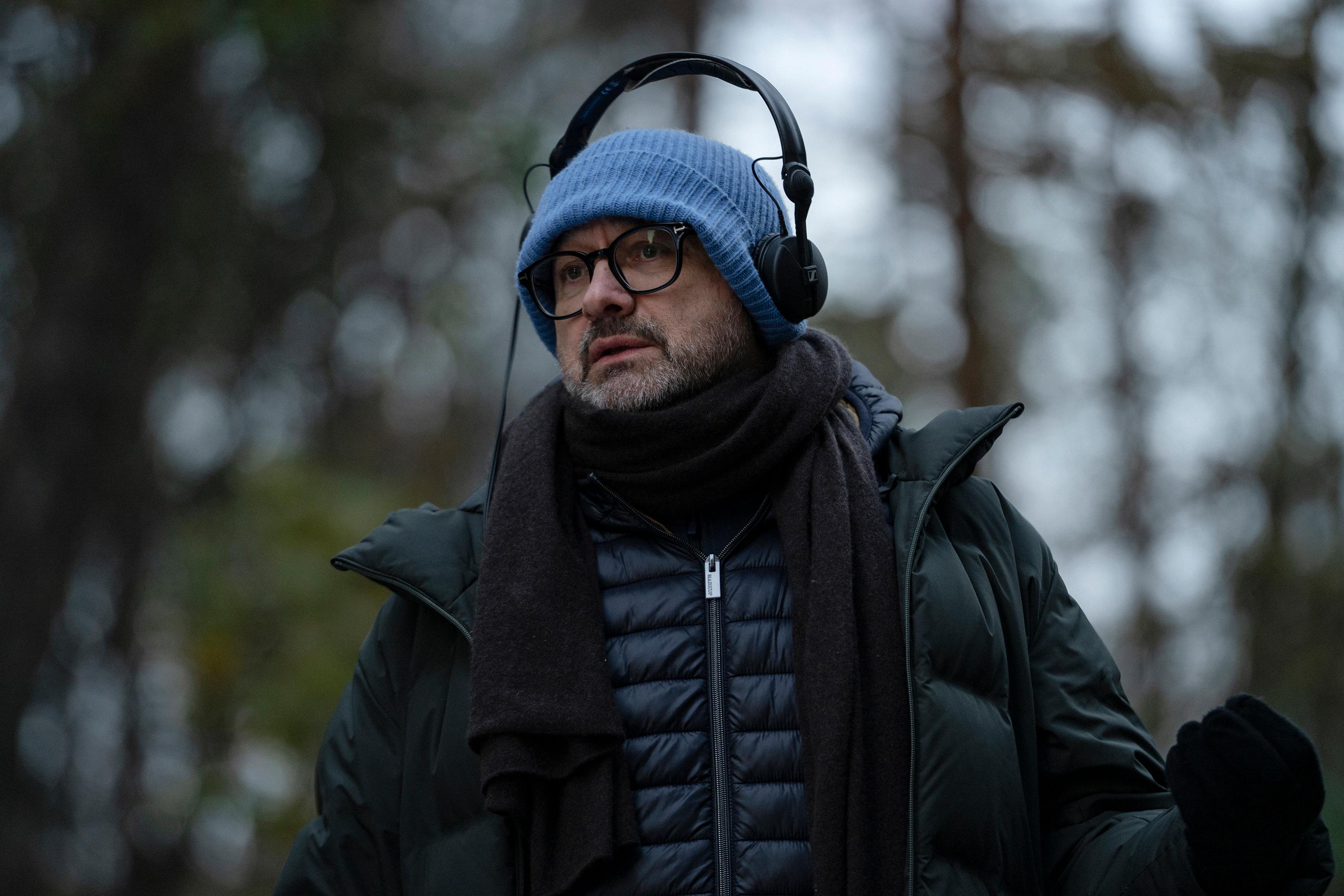
Andrey Zvyagintsev, director and cowriter of Minotaur, in a portrait from the film’s press kit. Photo credit: © Anna Matveeva / via Les Films du Losange.