

I Play Rocky puts the casting fight before the boxing match
Anthony Ippolito plays Sylvester Stallone in Peter Farrelly’s film about a writer trying to keep the role he created. Stephan James plays the actor on the other side of the ring.
A screenplay can be a way into a room where nobody has asked to see you act. The difficulty comes when the people in that room like the screenplay and imagine somebody else in your part. That is the bargain Peter Farrelly dramatizes in I Play Rocky, which expanded into wide U.S. theatrical release on November 20 after opening in select theaters on November 6. Amazon’s November 20 update describes the film as now playing in theaters globally. The picture reaches wider audiences as the original Rocky marks 50 years since its November 21, 1976, premiere. Critics Choice Association release dates, Amazon’s rollout update, FilmNation anniversary context.
Anthony Ippolito stars as the young Sylvester Stallone, working with a screenplay by Peter Gamble. The Amazon MGM trailer sells a story about how a role gets cast in the first place. The character whose name is on the marquee is still words on a page. People who could get the picture made want the option to cast their own lead. Stallone believes those decisions belong together. Once you give him that problem, a meeting is where the stakes become visible. Every person assessing him knows that saying yes to the writer and saying yes to the actor are two decisions they can make independently.
A part the writer can play
Forty or fifty years of iconography can make the choice to cast Stallone feel inevitable. The head tilt, the voice and the training clothes are all part of what people have learned to recognize as Rocky Balboa. Put those qualities in front of somebody who is considering paying for a movie, before audiences have told them how to read the performance, and they present a reason to proceed carefully. The prospective buyer has to imagine what the face will look like on a poster, what audiences will hear in the voice and how someone without established drawing power will carry the film. The writer walks into the same negotiation knowing the part in greater detail than anybody else in the room.
The premise invites an easy equation between Stallone’s faith in the script and Rocky’s willingness to go the distance. The casting dispute makes that parallel more interesting. A boxer in the ring has agreed to a contest with rules and an opponent. The writer trying to get his film made has to secure the chance to perform before anyone can see him do it. If he walks away, he preserves his leverage over the screenplay and loses that particular route to making it. If he sells, the movie can go forward while his opportunity disappears. There are several recognizable ways for him to come away with something valuable and still miss what he came for.
Ippolito has been here in a different capacity. In the Paramount+ miniseries The Offer, he played Al Pacino in a dramatization of the making of The Godfather. In I Play Rocky, he has to show why people in a room can be hesitant about a face the audience has already paid to see. A familiar physical manner can give a film about a known actor instant recognition. Pauses and failed attempts at persuasion are what can bring a viewer back to the moment before the actor became a safe bet. The studio’s trailer puts recognizability to work as an invitation and keeps returning to a disagreement about who should get the role. FilmNation’s introduction to Ippolito and the film.
Farrelly gave Awards Focus his own story of how Ippolito entered the picture. According to the director, Ippolito found the script and recorded three scenes in his grandmother’s basement on Long Island. Casting director Rick Montgomery sent the tape to Farrelly before the search was under way, and Farrelly says the production considered only Ippolito after seeing it. That account hits a familiar dramatic note, but it also draws attention to a person playing a distinct role in the decision. The tape mattered because a casting director watched it and took it to someone who could say yes. For an industry story about what can happen when one actor gets a shot, that handoff is worth remembering.
The performance on the other side of the ring
Stephan James plays Carl Weathers, the actor who created Apollo Creed onscreen. The Critics Choice Association honored James for the performance at its November 16 Celebration of Black Cinema & Television in Los Angeles. The recognition lands in the same week as the film’s wider release and makes a second piece of casting visible. The story may turn on whether Stallone gets to play Rocky. To make the original film work once that choice is made, somebody has to walk into the ring as a champion secure enough in his standing to create the occasion in the first place.
Apollo is part of the original Rocky’s show business. He can make a fight happen and understands that an audience needs a story to buy along with a seat. Weathers gives that arrangement a performer’s alertness to a room. Apollo’s ease in public gives the title character something to respond to long before the physical contest settles in. That is one reason going back to the casting room has potential as a drama. A decision that gives one actor the job also creates the need to find another person who can make every scene between them feel balanced. The actor playing the champion has a different kind of work to do from the actor playing the challenger, including persuading the audience that he has the right to dictate the terms.
Time has changed what viewers bring to that name. In Ryan Coogler’s Creed, Michael B. Jordan plays Apollo’s son Adonis, and the prospect of doing something with an inherited boxing name becomes a story of its own. Longtime viewers may have met Weathers as the original American champion. Others came to Apollo’s place in the story through Adonis and worked backward. For James, playing Weathers presents yet another relationship to that legacy. He is portraying an actor making choices about a part that will still have a life decades after he leaves the scene. The franchise makes that fact easy to appreciate, even when I Play Rocky is focused on what had to happen before the first film existed. MGM’s Creed film page.
What the anniversary puts in focus
The Academy’s 1977 awards record preserves the outcomes of several different decisions. Stallone was nominated for both acting and writing. The movie’s three wins included Best Picture, directing for John G. Avildsen and editing for Richard Halsey and Scott Conrad. Talia Shire was nominated as a lead actress. Burt Young and Burgess Meredith shared a supporting-actor field. Taken together, those credits give a sense of how many people had to do their own jobs well for Stallone’s wager to come to look inevitable. They also explain why reading the 1976 movie as a one-man career breakthrough can leave out much of what made it last.
Farrelly made a related point about his own film in the Awards Focus interview. He credited cinematographer Sean Porter and the production crew with helping recreate the period, and described visual effects work as including the removal of modern signs. A movie about a well-known film has a particular set of physical problems. Period streets have to hold up against images audiences can go back and watch. Every careful decision about the image also makes it easier for a viewer to attend to something else, like how an actor waits behind a door or how a room responds when the negotiation starts. The recognition the film depends on is produced across departments.
The festival credits name some of that team. Anthony Gasparro is the production designer, Amy Roth is the costume designer and Sam Seig is the editor. Those are useful names when looking back at the first-look photograph released by FilmNation. A gray training outfit, a black knit cap and a dog on a leash are almost enough to put a viewer straight into the old movie. Ippolito still has to make the clothes feel like something Stallone put on that morning. The photograph works as publicity because it can rely on our recognition. A scene has to stay alive through all the little decisions that follow it. AFI Fest production credits.
The November 20 date comes after a separate festival life. FilmNation announced the Toronto world premiere in its July festival slate, and the film also played AFI Fest. Its wider release gives audiences outside the first run of U.S. engagements a chance to encounter it as the anniversary arrives. That sequence matters when readers have already seen festival coverage or heard from friends in an earlier market. The November 20 development is the expansion of access, with local theater listings supplying the practical details.
There is a tidy success story in the fact that the film Stallone fought to make became the one people still talk about. There’s more to notice in the time before anybody was sure. An actor has to get somebody to watch the tape. A producer needs to decide which risk is worth taking. The person cast opposite the lead has to build a champion with his own reasons to be there. The wider release makes a good occasion to revisit the movie that came out of all those choices, and to watch for the things the people making it couldn’t take for granted.
Sources
- Amazon, November 20 rollout update and production credits
- Amazon MGM Studios, official trailer
- Critics Choice Association, Stephan James’s Supporting Actor honor and U.S. theatrical dates
- Critics Choice Association, event and honoree record
- Peter Farrelly interview, Awards Focus
- FilmNation, original premiere anniversary
- FilmNation, I Play Rocky’s Toronto premiere
- Academy of Motion Picture Arts and Sciences, 1977 Academy Awards
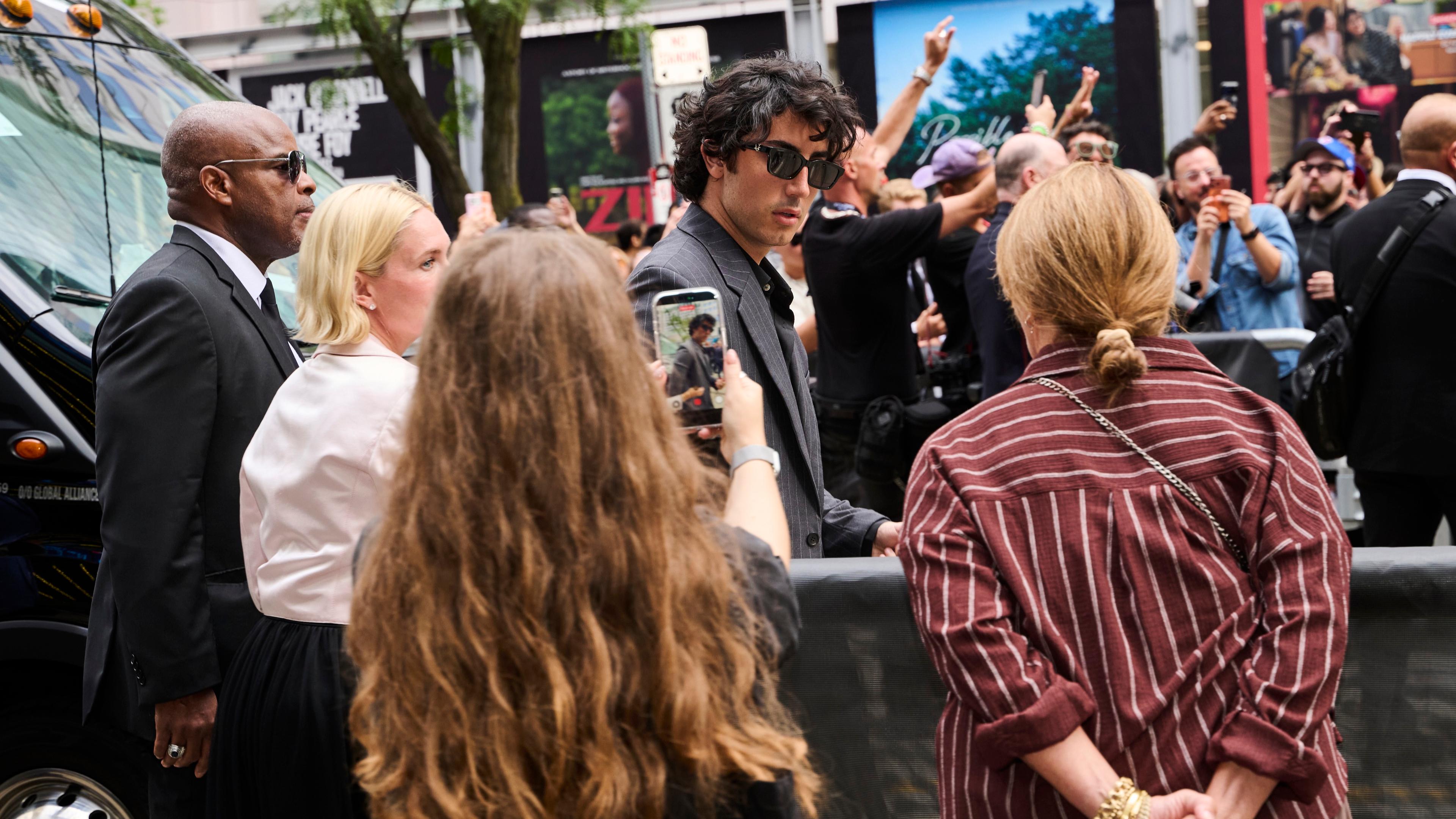
Anthony Ippolito arrives at the I Play Rocky premiere at the Princess of Wales Theatre during the Toronto International Film Festival on September 12, 2026. Gabriel Hutchinson via Wikimedia Commons, CC BY-SA 4.0 (cropped) https://creativecommons.org/licenses/by-sa/4.0/ Display uses a 16:9 crop. Source: https://commons.wikimedia.org/wiki/File:Anthony_Ippolito_at_TIFF_2026_01.jpg