

Gabriels opens up Blood On My Hands to guest voices
Evita opens and closes the quartet of songs, with Say She She and Qing Jaila in between. The new EP makes the casting part of the composition.
The first voice Gabriels gives you on Blood On My Hands belongs to Evita. The last one does, too. Between those appearances are a disco-soul trio and another singer, each with a song that leaves enough space in the credits for a new name to register. The EP came out November 20 with four tracks and a question built into the running order. How much of a group’s identity belongs to the people at the microphones, and how much can stay recognizable when the people behind them start arranging things differently?
Founding producers Ari Balouzian and Ryan Hope made the new record after vocalist Jacob Lusk went his own way. In an announcement quoted by The Line of Best Fit, the two said Lusk wanted to pursue other musical paths and described themselves as continuing with a wider Gabriels circle. The official release link and vinyl listing establish what that looks like on the EP. Evita takes the title song and “Lazy Afternoon.” Say She She is billed on lead single “Break It,” and Qing Jaila appears on “Eye of the Needle.” The record runs through all three collaborations in the space it takes most albums to introduce themselves.
The first song you heard lives at number two
“Break It” came out ahead of the EP, and there’s an official Gabriels video for the recording. The release date and the running order give the song two positions. It came first in the public rollout and comes second in the tracklist. Someone who found the new configuration through “Break It” may know how the group sounds with Say She She before hearing what it does with Evita. A listener starting from track one gets it the other way around. That small difference makes the framing central to the experience of hearing the project for the first time.
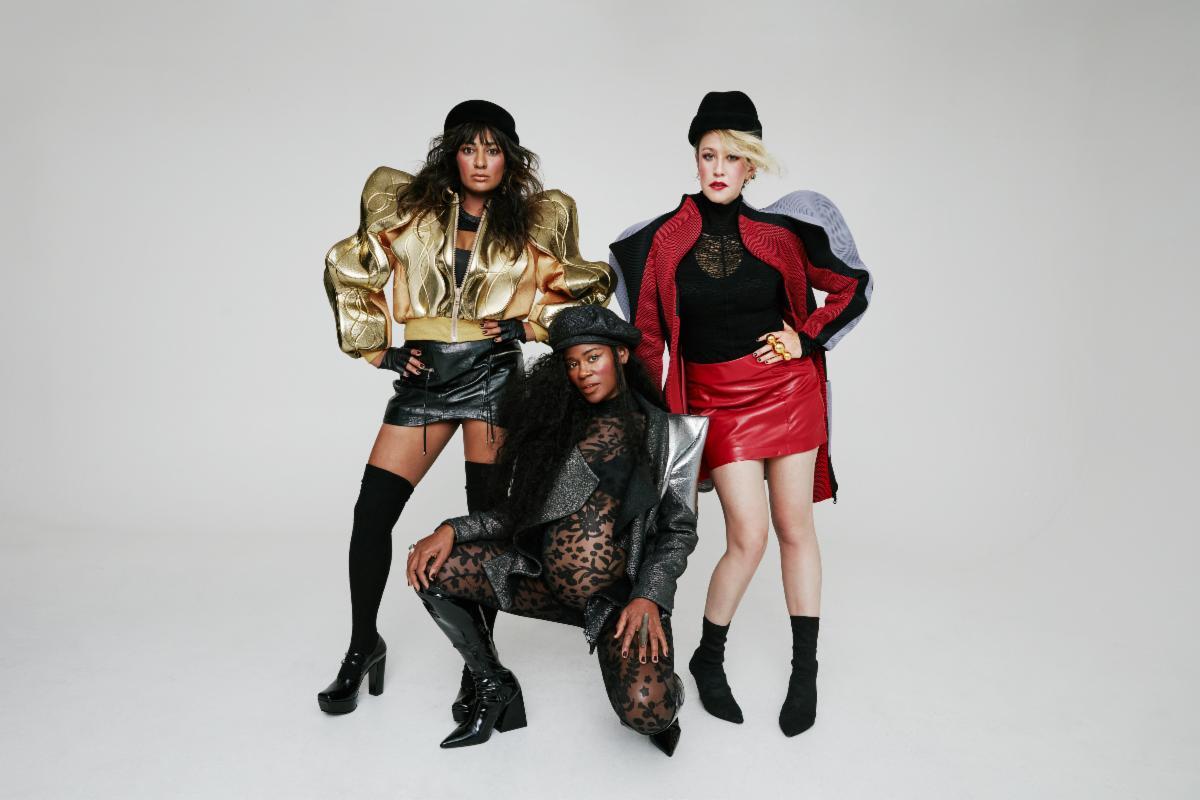
Say She She brings three voices and its own practice of arranging them. The group’s press materials identify Piya Malik, Sabrina Mileo Cunningham and Nya Gazelle Brown as its lead vocalists, and its 2025 album Cut & Rewind is a separate place to hear what that collaboration sounds like at full length. On the Gabriels record, the whole trio fits inside one feature credit. It’s a reminder of how much a short tracklist can compress. One name on the opposite side of a feature billing can carry multiple singers, working relationships and ways of getting to a harmony together.
For an audience that has never heard Say She She, the group’s title track from Cut & Rewind gives you another starting point. Its official video and the trio’s own catalog let you follow a vocal identity established on another record before finding it in a smaller space. For someone coming in through Gabriels, the same comparison helps you hear a collaboration as a meeting of two groups with a set of choices already behind them. The part with the quickest path to a new audience is also the part with the most voices in its single credit.
It would have been easy to introduce the EP in the order in which the songs were released. Beginning the collection with the title track gives that introduction to Evita instead. It also allows “Break It” to keep its own pull without letting it determine what the whole record sounds like on entry. The two positions can coexist because the record and its rollout answer different questions. The single is what Gabriels showed people first. The EP is how the group asks those people to hear the four songs together.
Evita gets both edges of the record
The titles provide a measure of the ground between Evita’s two appearances. “Blood On My Hands” gives a singer an image of responsibility to work with. “Lazy Afternoon” names a stretch of ordinary time. That shift becomes interesting even before a listener decides how each song handles it. Evita has the first chance to set the scale of the EP and the last chance to change it. The parts in between keep her from being the only measure of what a Gabriels vocal should sound like.
Dork’s release coverage identifies Evita as a principal vocal collaborator. That description fits the credits we can actually see. She appears twice and occupies both outer tracks. It also helps account for why the same EP gives the central pair of songs away to another group and another singer. With Qing Jaila on “Eye of the Needle,” a listener has heard three distinct names associated with lead vocals before Evita returns. Where a singer’s return sits can be every bit as meaningful as the fact that it happens.
The track with Qing rewards the same attention. It’s third, a location where an EP of four songs has to decide whether it’s building toward a second half or about to wrap up. “Eye of the Needle” places a different voice there after the better publicized collaboration. The title’s image suggests narrowness and difficulty, a marked change from a song named like a command to break something open. You can read those titles as separate invitations into each recording. Their proximity also gives the singer of the third track a job in the sequence that credits alone rarely make obvious.
The sequencing doesn’t tell you which of the new collaborations will recur on a future release. It tells you something more immediate about the people the group trusted with particular moments on this one. When an EP lists Evita twice and two others once each, the count tells part of the story. Hearing the record in the order given puts that count to use. The beginning and the end have a voice in common and something new to respond to on the second pass.
The sleeve credit and the position of each singer also offer a less obvious benefit. A listener has straightforward paths out of the EP. You can go to the featured artist’s own work and come back with a different ear for the moment that sent you there. A project built around an open microphone earns some of its length through those excursions. Each one should begin with the name of the person you actually heard.
A different way to carry a name
Gabriels’ earlier label biography gives a good reason that the microphone became so central to its image. Elektra’s account of Angels & Queens identifies Lusk as a Compton gospel singer, Hope as a producer and keyboardist from Sunderland, and Balouzian as a Los Angeles producer, composer and violinist. The three people brought specific work into the group. The arrangement that introduced them to larger audiences was already a collaboration between different kinds of musicians. When the singers change on the new recording, the continuity available to Hope and Balouzian includes ways of framing a vocal performance that were part of the group from the beginning.
That history leaves room to take Lusk’s work on its own terms. One place to return is the group’s 2023 performance of “Offering” for COLORS, which Elektra announces and links in its press materials. Set that performance beside the new credits and the difference is easier to understand as a matter of arrangement. A performance from the earlier lineup gives a listener a direct example of the chemistry behind a particular sound. The new release gives each vocalist one or two songs to make their own contribution to another arrangement. Both bodies of work give listeners a way into the name Gabriels.
Balouzian and Hope kept working separately after the debut album’s tour, as The Line of Best Fit reported with the EP announcement. The notice points to Balouzian’s film scoring, including his work for A24, and Hope’s DJ sets, including a Glastonbury appearance in 2025. Those jobs offer two different ways to think about the craft the producers brought back. A score has to make room for what the image and performers are telling you. A DJ set has to make a sequence hold together when one singer gives way to another. The jobs provide context for the decision to build a release around several vocal approaches. The arrangement has to have a shape of its own before a guest voice can give part of it a new character.
You can also hear what happens when the studio premise has to become a live one. Blue Note London lists two evening sets each on February 24 and 25, 2027, billing a new lineup with special guest vocalists. The distinction between two nights and four performances matters if you’re looking for a ticket. The venue describes the new live project broadly and names “Break It” as a preview. The EP documents which guests are on the recordings. The booking page describes who and what the club has announced for the stage. Together they give someone following this shift a second place to watch it take shape.
Until then, there’s a straightforward listening order that gives you both sides of the change. Play “Break It” first as it arrived in October, then go back to the beginning of Blood On My Hands and stay with it through “Lazy Afternoon.” Who opens the door will change. The arrangement of voices explains what happened in the months between the album-era lineup and the new EP more clearly than a roster change alone can. By the time Evita comes back around, there have been enough turns at the microphone for her return to mean something.
Sources
- Gabriels’ official website
- Artist-linked Blood On My Hands release page
- Banquet Records’ physical EP listing and complete sequence
- Gabriels’ official “Break It” video featuring Say She She
- Gabriels’ October announcement quoted by The Line of Best Fit
- Dork’s release reporting on the EP and Evita
- Say She She’s press release for Cut & Rewind and vocal credits
- Say She She’s official “Cut & Rewind” video
- Elektra’s original Gabriels artist biography
- Elektra’s release about the “Offering” COLORS performance
- Blue Note London’s Gabriels booking and lineup announcement
Say She She in a 2025 press portrait for Cut & Rewind. The group appears on “Break It,” the first single from Gabriels’ Blood On My Hands EP. Photo credit: Alyssa Boni / Shore Fire Media.